
A conventional UTV typically costs roughly $500 to $1,000 a year to maintain, while commercial electric UTV maintenance often falls around $425 to $750 annually before battery replacement risk. The cheaper routine bill doesn't mean an electric machine is cheaper in every harsh-duty job.
That distinction matters to anyone running equipment on a farm, ranch, construction site, warehouse, or remote property. Engine service disappears from an electric UTV, but tires, brakes, suspension, charging equipment, battery inspections, and high-voltage work remain. On a gas machine, the opposite trade-off applies. You pay for oil, filters, spark plugs, fluids, belts, and drivetrain service, but you don't carry the same battery replacement question later in the vehicle's life.
The useful way to calculate UTV maintenance cost is to start with operating hours and working conditions, then add predictable wear and a reserve for failures. A showroom price tells you what the vehicle costs to buy. It doesn't tell you what mud, dust, payloads, towing, steep terrain, or daily stop-start work will do to the service budget.
Table of Contents
- What UTV Maintenance Cost Actually Looks Like
- Typical UTV Maintenance Items and Cost Breakdown
- Gas vs Electric UTV Maintenance Cost Differences
- DIY Service vs Shop Service to Lower Costs
- Hidden Long-Term Costs Beyond Routine Maintenance
- How to Budget for Annual and Lifetime UTV Maintenance
- Conclusion – Smarter Maintenance Choices Reduce Real Cost
What UTV Maintenance Cost Actually Looks Like
A 2023 industry summary placed average annual UTV maintenance at about $600 per year, with 55% of owners handling maintenance themselves and 45% paying for professional service (ZipDo's UTV industry summary). That figure is useful as a planning baseline, but it shouldn't be treated as a promise. It blends recreational and work use, light and severe conditions, and owners who perform their own labor with owners who pay shop rates.
Consider two machines with the same purchase price. One carries a hunter over maintained trails for occasional trips. The other hauls fencing supplies, pulls a loaded trailer, crosses wet ground, and works through dust every week. Their annual maintenance bills won't follow the same pattern because their hours, loads, and environments aren't the same.
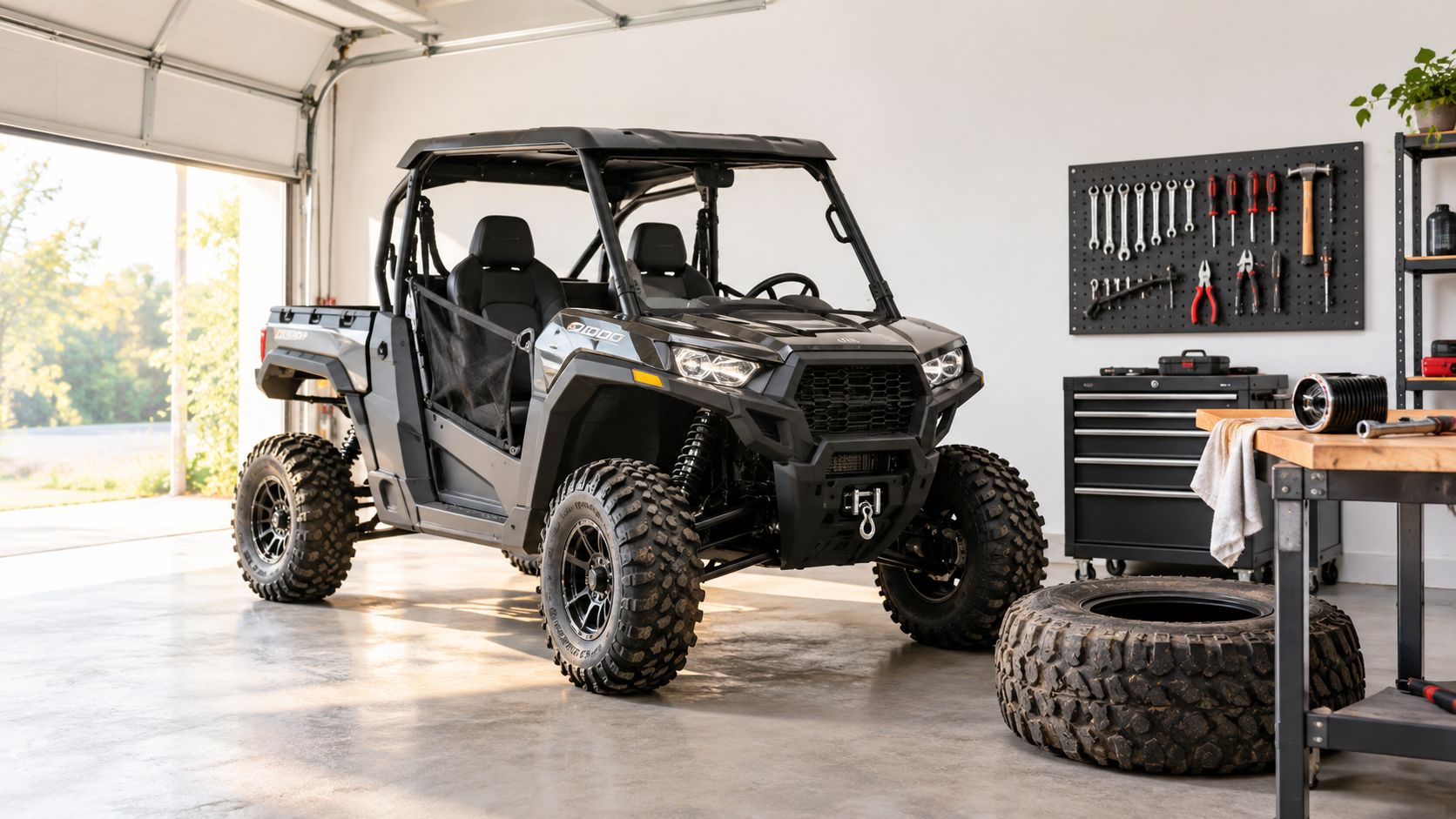
The baseline usually covers routine service and normal wear. It may include fluids, filters, inspections, occasional belt work, brake service, and small repairs. It doesn't necessarily reflect a damaged suspension component after carrying heavy loads, a tire set worn down by hard surfaces, or an electrical fault that appears after repeated exposure to water and dirt.
Hours matter more than the odometer
UTVs measure work differently from passenger vehicles. A low-speed machine can spend hours pulling, climbing, idling, and turning without covering much ground. Engine hours, load cycles, and terrain therefore tell you more about future maintenance than distance alone.
A recreational owner can often plan around seasonal inspections and manufacturer service intervals. A commercial operator needs a system that records hours, identifies repeat failures, and flags components that wear faster in a particular job. A ranch UTV may need closer attention to suspension and tires, while a warehouse vehicle may place more stress on brakes, steering, and battery charging equipment.
Practical rule: Budget from the work the UTV performs, not from the number printed on the sales sticker.
The most expensive surprise usually isn't the routine oil or filter service. It comes when a predictable wear item is ignored until it damages another component, or when a vehicle remains unavailable during a critical work period. Preventive maintenance doesn't eliminate repair bills, but it gives the owner more control over timing, parts, and labor.
Typical UTV Maintenance Items and Cost Breakdown
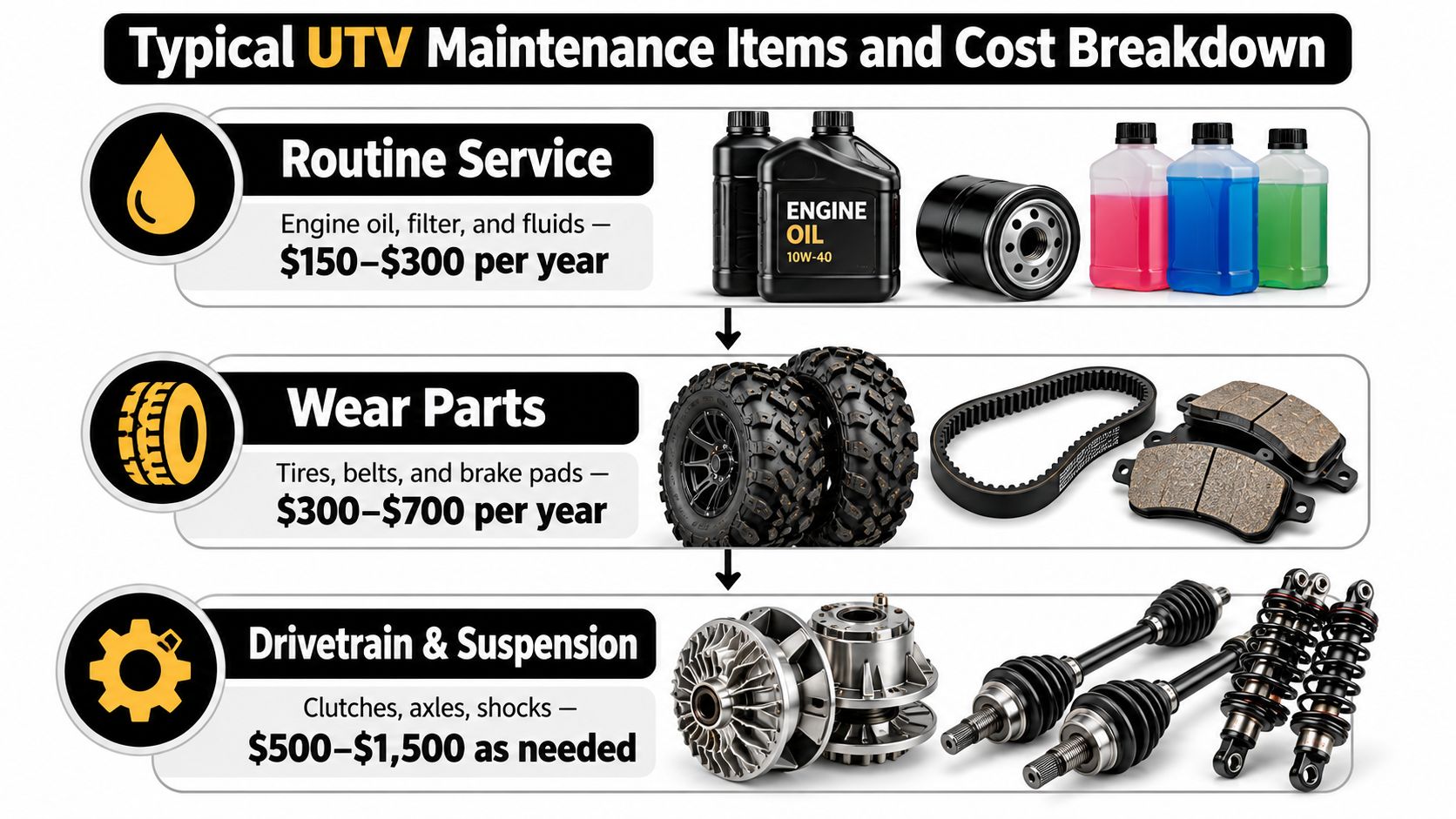
A side-by-side maintenance budget often falls between $500 and $1,000 annually, depending on workload, service access, and failure exposure. A 2026 maintenance guide lists scheduled oil, filter, and fluid service at $100 to $300, while a CVT drive belt may cost $200 to $400 per belt. It also lists insurance at $100 to $400, with dealer labor commonly priced at $80 to $120 per hour (Ride South Mississippi's side-by-side maintenance guide). Those figures describe planning ranges, not a promise that every year will produce the same invoice.
Routine service is predictable
Oil, filters, coolant, differential fluid, and other scheduled fluids make up the most predictable part of a gas UTV budget. These services rarely create the largest single bill, yet postponing them can turn inexpensive upkeep into engine or drivetrain wear.
Dusty work sites make air filtration a priority. A filter can look clean from the outside while being restricted or poorly sealed. Follow the manufacturer's cleaning procedure because aggressive washing can damage some filter media. The practical saving comes from checking the filter before contamination reaches the intake, not from stretching its service life indefinitely.
Electric UTVs remove engine oil, spark plugs, and many transmission-related tasks. They still require checks of cooling systems, connectors, charging equipment, battery condition, chassis fasteners, and safety systems. High-voltage inspection also belongs in the service plan, particularly after water, mud, impact, or connector damage. Routine maintenance changes shape rather than disappearing, and harsh-duty use can shift savings toward battery, charging, and electrical inspection costs.
Wear parts create uneven bills
CVT belts show why an annual average can mislead. A belt replacement arrives as a discrete bill, not a smooth monthly expense. Improper loading, deep mud, steep climbs, and repeated low-speed work increase belt stress. An inspection costs less than the downtime and secondary damage that can follow a failure.
Tires, brake pads, bushings, wheel bearings, axles, and suspension joints wear according to the job. Hard surfaces can consume tires faster than soft trails. Heavy payloads and repeated downhill travel increase brake demand. Uneven terrain transfers impacts into shocks, control-arm joints, steering components, and chassis mounts. Electric UTVs avoid some engine service, but they do not avoid these site-driven costs. Battery weight and repeated heavy loads can also make tire and suspension condition important over a long ownership period.
Choose replacement tires by tread design, load rating, terrain, and puncture resistance rather than purchase price alone. This UTV tire review resource provides a starting point for comparing those factors, especially when tire choice affects traction and replacement frequency.
Labor changes the economics
DIY owners can keep accessible service close to parts cost. Shop customers pay for diagnosis, preparation, labor, and access to difficult components. Dealer labor commonly falls between $80 and $120 per hour. A 1.5-hour belt-access job therefore adds $120 to $180 in labor before parts, which makes access time and hour tracking worth separating on a quote.
If you also maintain trailers, boats, or other equipment, local benchmarks such as find boat detail rates in Columbus can help separate labor pricing from consumables when comparing providers. The same question applies to UTV work: ask what the quote includes, which parts will be replaced, and whether inspection or troubleshooting time is billed separately.
Create two budget categories: scheduled maintenance and failure exposure. Scheduled work is easy to reserve. Failure exposure covers suspension, electrical, drivetrain, battery, and collision-related repairs that arrive without a convenient calendar date. Over five to ten years, those irregular costs often matter more than small fluid-service differences, particularly when a vehicle reaches the end of its battery warranty.
Gas vs Electric UTV Maintenance Cost Differences
Annual maintenance can range from $400 to $800 for recreational UTVs and from $1,200 to $2,100 for commercial and agricultural units, according to Marketintelo's utility terrain vehicle market report. The gap reflects longer duty cycles and faster wear on tires, brakes, filters, fluids, and suspension components. The same report estimates that electric UTVs can reduce maintenance by 35% to 40% by removing oil changes, spark plugs, and transmission servicing.
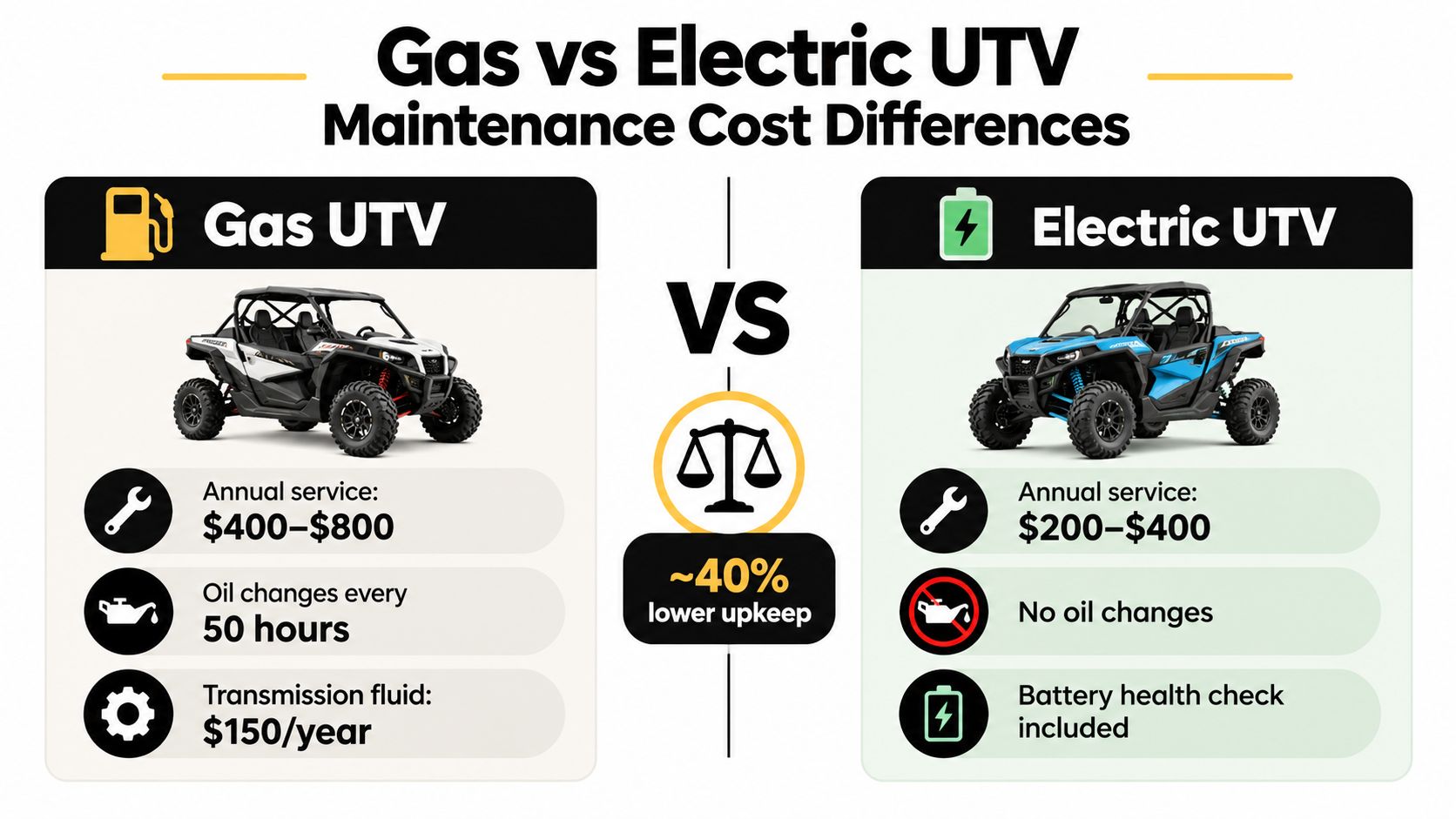
Gas and electric models reduce costs in different places. Gas UTVs require more scheduled engine work. Electric UTVs reduce that recurring service, but shift more attention toward battery condition, high-voltage inspections, charging equipment, and wear caused by the worksite.
Where gas models still spend money
A gas UTV has several familiar maintenance categories:
- Engine service: Oil, oil filters, air filters, spark plugs, coolant, and related inspections.
- Drivetrain service: Differential fluids, transmission or gearbox service, CVT inspection, and belt replacement where applicable.
- Workload-related wear: Tires, brakes, wheel bearings, axles, suspension joints, and steering parts.
- Shop exposure: Diagnostic labor for fuel, ignition, cooling, and transmission problems.
Gas models remain easier for teams with combustion-equipment experience to diagnose and repair. Many local shops already have the tools and knowledge for gas engines, and operators can often identify basic faults without high-voltage training. The trade-off is a larger collection of engine systems, fluids, filters, and consumables to monitor over the vehicle's life.
What electric UTVs remove
Electric drivetrains eliminate the oil changes, spark plugs, and transmission servicing identified in the market report. They also use fewer engine-related components, which can simplify service scheduling and reduce routine shop visits for fleets with high operating hours.
Electric does not mean maintenance-free. A work UTV still carries payload, crosses uneven ground, stops under load, and absorbs repeated impacts. Tires, brake components, suspension joints, steering parts, fasteners, and chassis components still require inspection and replacement as conditions demand.
The larger long-term question is battery exposure. Harsh charging patterns, heat, heavy loads, and high operating hours can accelerate battery degradation. A battery replacement near or after the end of its warranty can outweigh years of saved oil, filter, and spark-plug service, so buyers should include that risk in a five to ten-year ownership plan.
A Campus EV off-road electric utility vehicle should therefore be assessed by its complete support requirements. Ask how it is charged, who records battery condition, who performs high-voltage inspections, and how repairs are handled when the vehicle operates far from a dealer.
Severe duty changes the comparison
The meaningful comparison is the electric drivetrain's lower routine burden against its battery, inspection, and component-wear exposure. In mud and dust, both powertrains can require brake and bearing attention, but electric units add connector checks and high-voltage inspection time. Gas units add air-filter contamination checks, belt inspection, and fuel, ignition, or cooling diagnosis. The terrain is the same, but the labor categories are different.
Towing and payload can increase tire and brake demand on either model. Stop-start warehouse work may create frequent acceleration, braking, and charging cycles despite limited travel. Construction work adds vibration, debris, and sustained heavy loads, conditions that can shorten the life of suspension, steering, and electrical components.
Recreational buyers may capture the electric advantage more easily because their vehicles often accumulate fewer harsh operating hours. Agriculture, construction, and fleet buyers should compare service records by operating hour and job type, then reserve money for battery risk and high-voltage inspection. The lowest advertised maintenance figure matters less than keeping the most expensive components reliable throughout the assigned work.
DIY Service vs Shop Service to Lower Costs
DIY maintenance works best when the task is repeatable, visible, and safe to complete with the tools and instructions available. Shop service earns its price when diagnosis, access, calibration, or high-voltage safety creates meaningful risk.
A practical division looks like this:
- Do yourself: Hour tracking, fluid-level checks, tire-pressure checks, visual inspections, cleaning, fastener checks, and accessible filters.
- Use a qualified shop: Electrical diagnosis, drivetrain repairs, suspension alignment, difficult belt or clutch work, and any high-voltage inspection.
- Combine both: Perform routine checks yourself, then give the technician a clear record of hours, symptoms, loads, and recent repairs.
A conventional UTV maintenance benchmark places annual planning at $500 to $1,000, with oil changes every 50 to 100 hours, tires every 100 to 400 hours, brake pads every 200 to 400 hours, and batteries every 2 to 4 years (Powersport Financing's UTV cost guide). Dealer labor is commonly $80 to $120 per hour, and suspension or electrical failures can add $100 to $500 or more annually, according to the same guide.
Those intervals aren't a substitute for the owner's manual. They're planning markers that show why hour tracking matters. A farmer who waits for a calendar reminder may miss the actual service trigger if the UTV accumulates heavy operating hours quickly.
A simple service-control system
Record the date, hour reading, task, parts used, and any defect found. Add a note about the job that week, such as towing, hauling, mud work, or prolonged low-speed operation. This creates a useful maintenance history and helps identify whether a recurring tire, brake, or suspension problem comes from the vehicle or from the assignment.
Don't DIY a repair just because the part is inexpensive. A poorly fitted belt, loose suspension fastener, damaged seal, or incorrect electrical connection can create downtime and a second repair. Saving labor is worthwhile only when the work is completed correctly and the vehicle returns to service with confidence.
The cheapest service is the one that prevents a small, visible defect from becoming a disabled vehicle during a critical job.
Hidden Long-Term Costs Beyond Routine Maintenance
Annual maintenance figures answer only the short-term question. A buyer comparing ownership over 3 to 10 years also needs to ask what happens after the routine savings have already been captured.
Electric UTV coverage often emphasizes the removal of oil changes, filters, spark plugs, and exhaust-related servicing. That advantage is real, but fleet operators still face tires, brakes, suspension, high-voltage inspections, battery care, charging equipment, and downtime. A fleet-focused guide estimates annual electric maintenance at $425 to $750, compared with $1,950 to $3,550 for gas units, while also emphasizing that severe-use conditions can change the wear profile (Build-Construct's electric UTV fleet guide).
Battery risk needs its own budget line
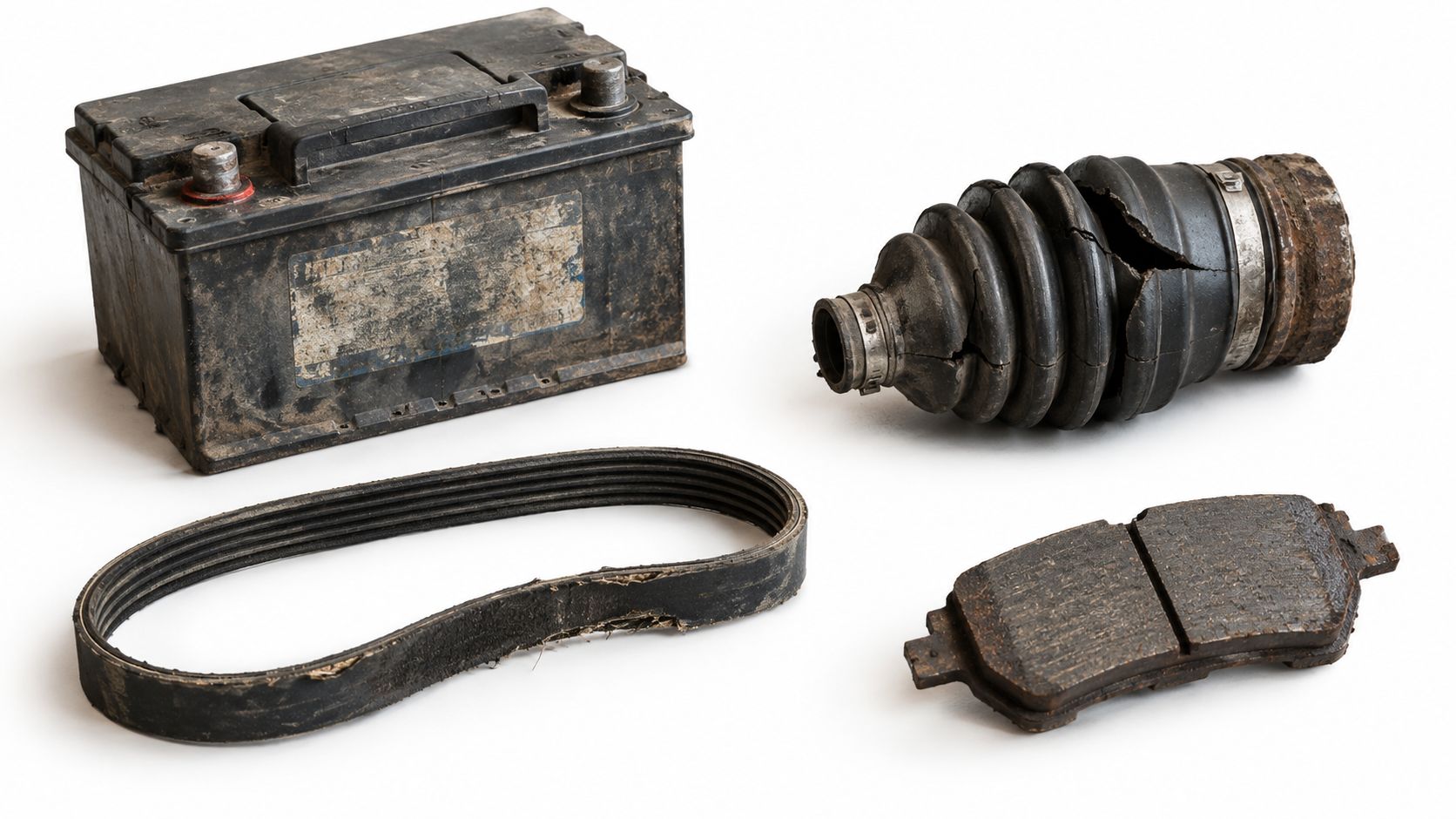
The battery is the component that most often changes the long-term electric ownership calculation. Routine care may involve charging discipline, storage practices, battery health monitoring, thermal considerations, and high-voltage inspections. Those tasks don't look like engine maintenance, but they still consume time and may require qualified service.
A 2023 dataset cited in independent coverage placed average lithium-ion battery replacement at about $800, while also noting that the figure doesn't establish when a specific UTV battery will require replacement under commercial use (GoldSupplier's electric UTV comparison). That limitation is important. A replacement average isn't a lifecycle forecast for a particular battery, fleet, climate, workload, or charging routine.
Warranty terms matter just as much as the replacement price. Before buying, ask:
- What battery capacity or performance condition qualifies for warranty service?
- Which inspections must an owner document?
- Does commercial or agricultural use change coverage?
- Who performs high-voltage diagnostics?
- How long can a replacement or major repair keep the vehicle out of service?
The answers determine whether battery degradation is a manageable planned expense or a disruptive end-of-warranty event. A buyer should request the warranty language in writing and record battery health checks throughout ownership.
Severe work replaces one burden with several others
Mud, dust, towing, payloads, and stop-start work don't disappear because the engine does. They can accelerate tire wear, brake wear, suspension loading, connector contamination, and cooling-system demands. In a fleet, downtime may also require a substitute vehicle or a change to the work schedule, even if the repair invoice itself is modest.
Use the video below as a practical reminder that long-term parts exposure includes more than the powertrain.
The strongest five-to-ten-year budget separates three reserves: routine service, wear parts, and major component risk. For a gas UTV, the major risk may center on engine, transmission, clutch, or fuel-system repairs. For an electric UTV, it may center on battery condition, high-voltage service, charging equipment, and the cost of keeping the unit productive while a repair is arranged.
How to Budget for Annual and Lifetime UTV Maintenance
Start with last month's hour-meter reading, not the drivetrain type. Log hours, load type, terrain, and downtime for 30 days, then assign dollars to the three reserves below based on actual use. Commercial and agricultural operators should treat the higher-duty-cycle range noted earlier as a warning that tires, brakes, filters, fluids, and suspension parts may consume the budget faster.
- Routine reserve: Scheduled service, inspections, fluids, filters, charging checks, and ordinary shop labor.
- Wear reserve: Tires, belts where applicable, brake components, suspension joints, bearings, and other parts affected by hours, load, dust, and abrasive ground.
- Lifecycle reserve: Major engine, transmission, clutch, or fuel-system repairs for gas models. For electric models, include battery condition, high-voltage inspection, charging equipment, and downtime while specialist work is arranged.
Review the reserves each month against completed work. Towing, hauling, downhill braking, mud, and abrasive surfaces justify a larger wear allowance. Electric UTVs may reduce routine engine service, but batteries, tires, suspension, connectors, and high-voltage checks can become the larger long-term costs, especially near the end of warranty coverage.
A written fleet vehicle maintenance schedule helps managers assign inspections, document defects, and prevent operators from assuming someone else checked the vehicle. An individual owner can use the same process in a spreadsheet linked to the machine's service records.
Compare purchase options using more than oil-service savings. Include tires, brakes, charging equipment, battery inspections, possible battery replacement, and lost work time. Buyers assessing broader utility powersports costs can review this guide to how much a quad costs and adapt its budgeting logic to their workload.
Conclusion – Smarter Maintenance Choices Reduce Real Cost
UTV maintenance cost is controlled by matching the machine to the job, tracking hours, and servicing wear items before they become failures. Gas models demand more routine engine and drivetrain attention. Electric models can remove those tasks, but harsh-duty owners still need to budget for tires, brakes, suspension, high-voltage inspections, charging equipment, and eventual battery risk.
The best choice depends on the work schedule and the team's ability to service the vehicle. DIY checks can reduce labor spending when the task is straightforward. Qualified shop work remains the safer choice for complex diagnosis, difficult drivetrain repairs, and high-voltage systems.
Treat annual maintenance as only one part of ownership. A realistic five-to-ten-year plan accounts for downtime, component condition, warranty limits, and the cost of keeping the UTV working when the job can't wait.
Campus EV offers electric UTV options and ownership guidance that help buyers evaluate routine service, work-site wear, charging needs, and battery replacement risk together. Visit Campus EV to compare electric utility vehicles and build a maintenance budget around the jobs you perform.