
You're probably here because a gas side-by-side still does the job, but it also brings the usual baggage. Cold starts. Engine noise when you're trying to check fence lines at dawn. Fuel smells in the barn. Weekend maintenance that somehow turns a quick ride into a half-day project.
That's where the electric side by side ATV gets interesting. Not because it's trendy, but because it changes the feel of ownership. You turn the key, or push the button, and it's just ready. No revving to wake up the machine. No exhaust cloud. No engine heat baking your legs during slow work.
The hard part is that most electric UTV coverage stops at marketing language. Quiet. Fast torque. Low maintenance. Fine. But buyers usually want two practical answers. How far will it really go when the trail gets rough or the cargo gets heavy? And how do you recharge it when you're on a farm, a lease, or a remote property?
Table of Contents
- The Quiet Revolution in Off-Roading
- What Is an Electric UTV and How It Compares to Gas
- Decoding Electric UTV Specs Range Torque and Charging
- Putting It to Work Real-World Electric UTV Use Cases
- Ownership Essentials Maintenance and Legal Considerations
- Choosing Your Ride How the Campus E1 Fits the Mission
- Frequently Asked Questions About Electric Side by Sides
The Quiet Revolution in Off-Roading
A lot of riders first notice the difference before they know anything about batteries or motors. They hear less. A gas UTV announces itself from a distance. An electric machine moves with tire noise, gear clatter, and the sound of the terrain under it. For some owners, that's a novelty. For others, it solves a daily annoyance.
That matters on working land. It matters around animals. It matters when you're checking property early, rolling through a hunting lease before sunrise, or driving near homes where engine noise gets old fast. The appeal isn't just silence for silence's sake. It's a calmer machine that feels easier to live with.
The category is also moving from experiment to real market segment. One industry estimate projects the global electric ATV and UTV market will grow from USD 3.08 billion in 2026 to USD 8.49 billion by 2035, with a 12.1% CAGR, and says North America holds 38% of the market today, according to Business Research Insights' electric ATV and UTV market report.
Why buyers are paying attention
Some of that interest comes from curiosity. A lot of it comes from frustration with the old routine.
- Noise fatigue: Gas machines are familiar, but they're rarely subtle.
- Maintenance drag: Oil, filters, spark plugs, belts, fuel issues, and seasonal storage all take time.
- Use-case fit: Many owners don't need all-day high-speed range. They need a machine for repeated short trips, hauling tools, and moving with minimal sound.
Practical rule: Electric side-by-sides make the most sense when your riding pattern looks like lots of short missions, repeated starts and stops, and easy access to power between uses.
That doesn't make electric the automatic winner. It does mean 2026 is a useful time to look closely, because the machines are good enough now that the buying decision comes down to mission fit, not just novelty.
What Is an Electric UTV and How It Compares to Gas
An electric UTV, often called an electric side-by-side, is a utility terrain vehicle that uses battery power and electric motors instead of a gasoline engine. It's still a side-by-side in the way most riders understand the term. Two or more seats. Steering wheel. Cargo or utility focus. Off-road tires. A chassis built for work, trails, or both.
What changes is the powertrain. That one shift affects nearly everything you notice from the driver's seat.
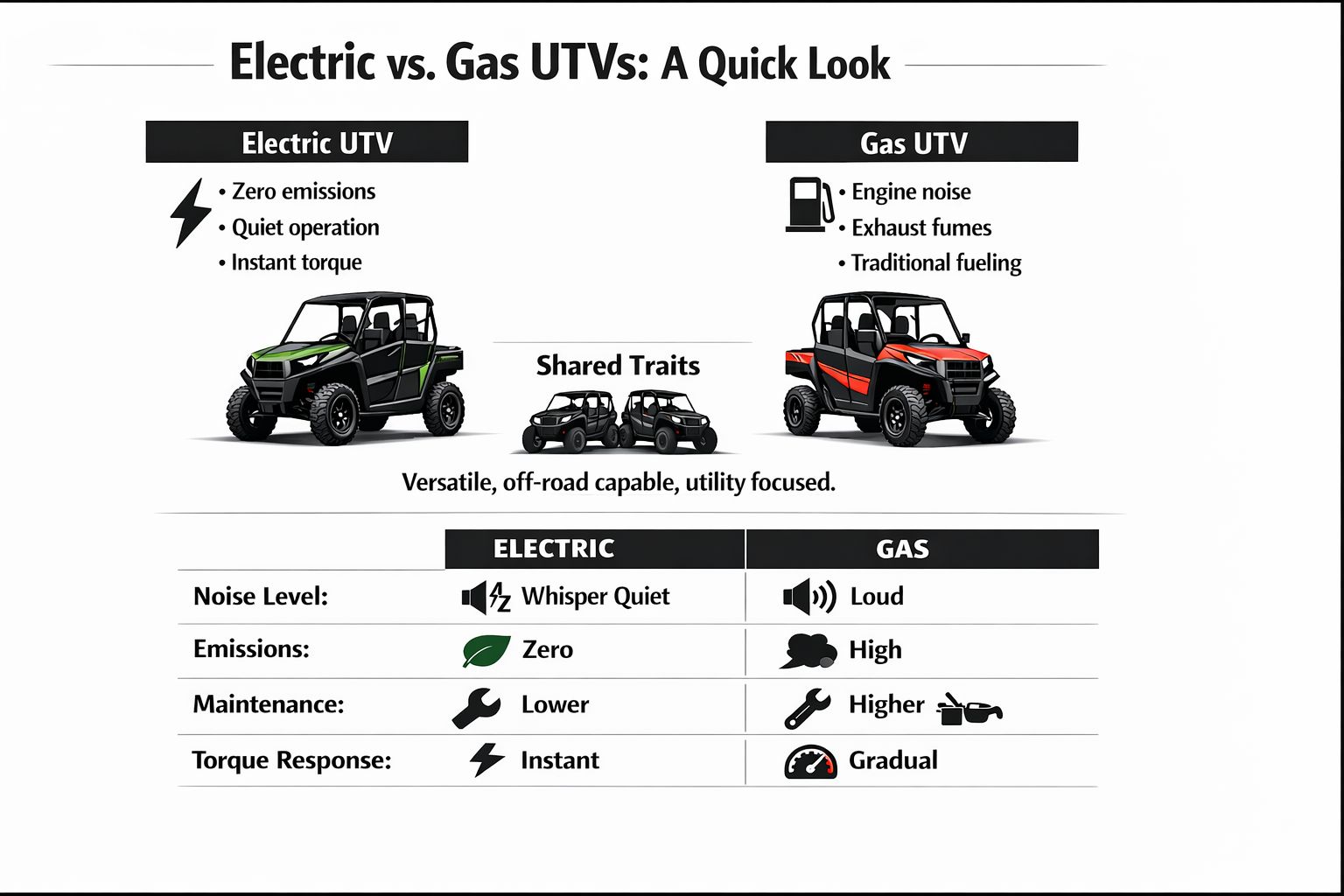
Two machines with the same job
Think of a gas UTV and an electric UTV as two workers assigned the same chore list. One carries a gas can and likes to be revved. The other starts up, delivering power right away.
A premium example shows how capable electric side-by-sides have become. Polaris positioned the Ranger XP Kinetic as a full-size electric work vehicle with a 29.8 kWh battery, an estimated 80-mile range, and 110 horsepower, with some Canadian trims discussed at about $48,000, as noted in this Ranger XP Kinetic video overview. That tells you two things at once. Electric UTVs are real production machines now, and the price can still sit well above many gas utility models.
Here's the simplest comparison:
| Feature | Electric UTV | Gas UTV |
|---|---|---|
| Power feel | Immediate and smooth | Builds with revs |
| Noise | Very quiet | Engine and exhaust noise |
| Fueling | Plug in to recharge | Refill at the pump |
| Routine maintenance | Fewer engine-related tasks | More engine-related service |
| Long remote days | Depends heavily on charging access | Easier to refuel quickly |
Where the ownership experience changes
The biggest difference isn't top-speed bragging rights. It's the way each machine fits your week.
With gas, the rhythm is familiar. Refuel fast. Carry extra fuel if needed. Keep up with engine service. Expect heat, noise, and vibration as part of the package.
With electric, the rhythm shifts:
- Morning starts are simpler: You don't wait for the engine to settle in.
- Low-speed work feels cleaner: No clutchy, revvy sensation in stop-and-go chores.
- Home-base charging matters more than gas station access: Your barn outlet may matter more than the nearest town.
A gas UTV is like a traditional pickup with a full tank nearby. An electric side by side ATV is more like a cordless tool system. If your charging setup matches your routine, it feels convenient. If it doesn't, you feel it every day.
Neither platform is perfect for every rider. Gas still wins plenty of jobs, especially when your day runs long and far from power. Electric starts to shine when quiet operation, easy starts, and repeated utility runs matter more than quick refueling in the backcountry.
Decoding Electric UTV Specs Range Torque and Charging
Spec sheets confuse buyers because they mix engineering language with real-life chores. You don't care about a number in isolation. You care whether the machine can haul feed, climb a wet grade, and still have enough charge to get back to the shed.
That's why three specs matter more than the rest. Range. Torque. Charging.
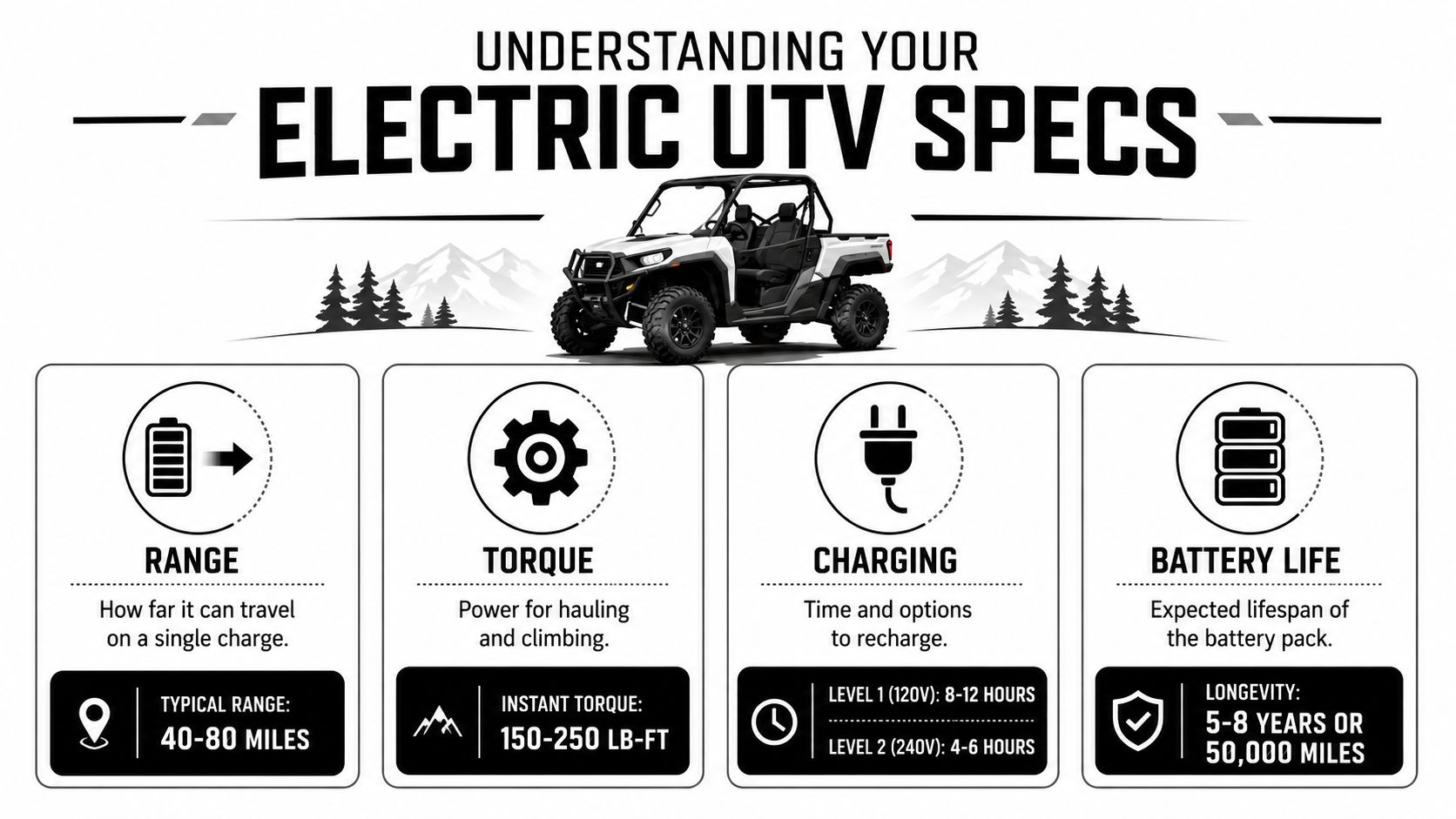
Range is a use pattern not a magic number
Range gets advertised like it's fixed. It isn't. It behaves more like fuel economy in a truck. Flat pavement, light load, and easy speeds are one thing. Hills, mud, passengers, tools, and repeated acceleration are another.
Independent reviewer coverage points out that one electric side-by-side has about 40-ish miles of range in practical discussion, and that steep slopes plus repeated off-roading can push a machine beyond its comfortable use case. That same coverage also notes electric models can work very well for short, stop-and-start property work and tactical hunting use, but may be a poor fit for remote, multi-day trail travel without charging, according to this real-world electric side-by-side review discussion.
Here's a better way to think about range:
- Property loops: Usually friendlier to electric because you can recharge between uses.
- Trail rides with elevation: More demanding because hills and speed eat into usable range.
- Hauling gear: Every extra pound makes the battery work harder.
- Cold or heat: Battery systems don't love extremes, so plan conservatively.
If you're asking, “Will it go 60 miles?” ask a better question instead. “Will it go my 25-mile route with tools, hills, and enough reserve that I'm not limping home?”
Torque is what you feel at low speed
Horsepower gets the headlines. Torque gets the work done.
A good analogy is this: horsepower is like a sprinter at full stride, torque is like a weightlifter picking up a heavy object from the floor. In a utility machine, that first shove matters. Pulling away with a trailer. Climbing a grade from a dead stop. Crawling through mud without jerky drivetrain behavior.
Electric motors deliver maximum torque from zero rpm. Independent UTV coverage describes electric side-by-sides as being defined by instantaneous torque delivery, with examples showing up to 140 lb-ft of torque and towing ratings around 2,500 lb, as explained by Perfex Industries in its electric UTV overview.
What that means from the seat:
- Smoother hill starts: Less waiting for revs to build.
- Better low-speed pull: Useful when hauling feed, fencing supplies, or a small trailer.
- Less drivetrain shock: The power comes on cleanly instead of surging through a gas CVT feel.
Charging is where planning matters
Charging sounds simple until you ask where the machine sleeps and how fast you need it ready again.
Recent coverage highlights a major spread in real charging times. One 29.8 kWh model can take about 6 hours on a Level 2 220V charger, while a similar machine may need about 35 to 40 hours on a standard 110V outlet, according to this electric UTV charging discussion.
That gap changes everything. A Level 2 setup can turn overnight charging into a normal habit. A standard outlet may work for light use, but it can become frustrating if you run the machine hard and need it again soon.
If battery terms still feel abstract, it helps to understand the difference between power and energy. A battery's storage capacity and a charger's delivery rate aren't the same thing. This guide to solar and EV energy units gives a plain-English explanation of kW versus kWh, which is exactly the distinction buyers trip over when reading electric UTV specs.
A simple charging checklist helps:
- Where will it park every night? Barn, garage, shed, or equipment building.
- What outlet is there? Standard household power or a higher-voltage circuit.
- How often do you use most of the battery? Occasional deep use is different from daily heavy work.
- Do you need field charging? If yes, think through generator use, campsite power, or backup plans before you buy.
Putting It to Work Real-World Electric UTV Use Cases
Specs matter. Daily routines matter more. Most buyers decide after they can see the machine in their own life.
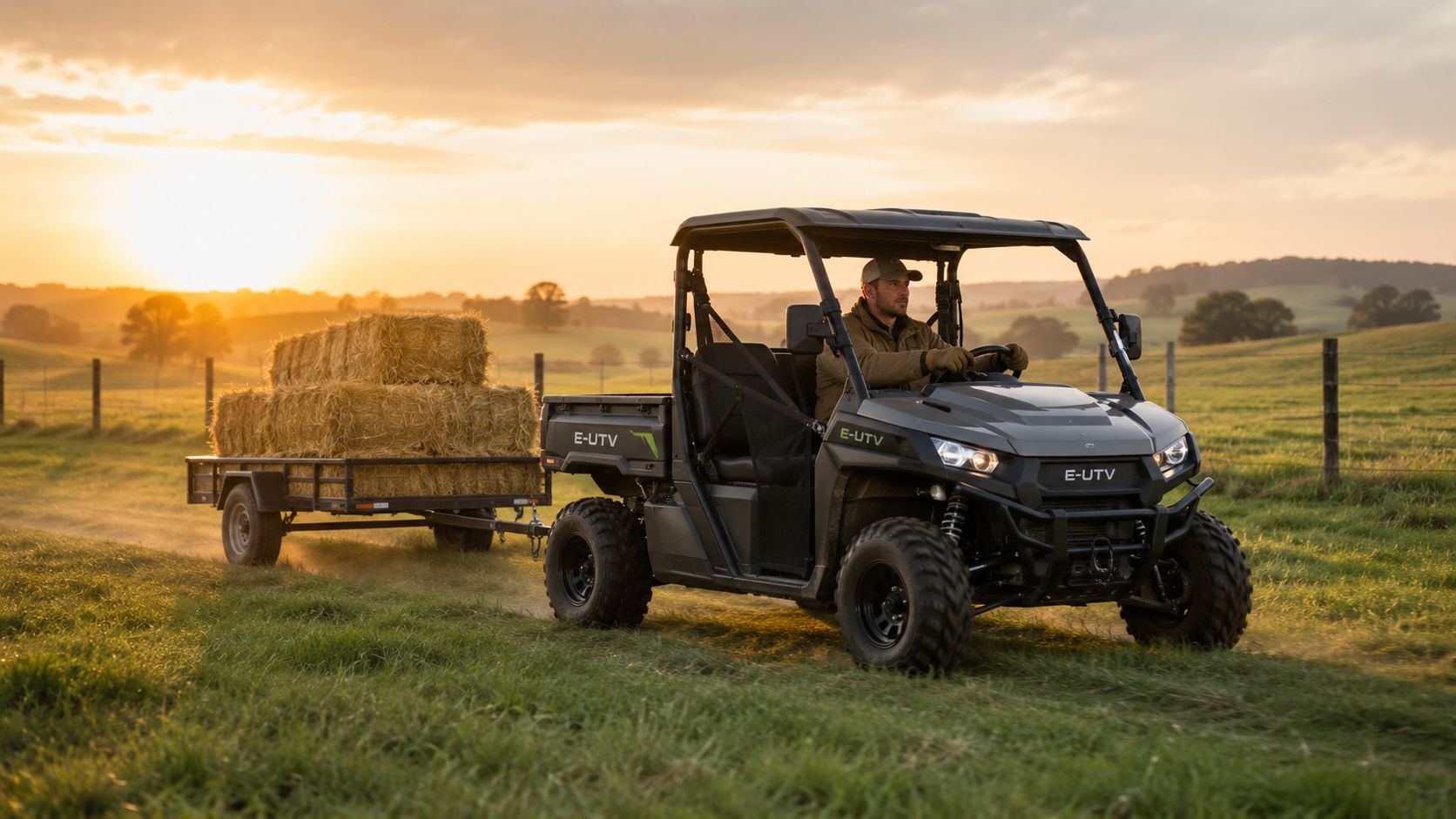
Farm and ranch chores
A ranch owner uses the same route over and over. Gates, troughs, tools, fencing supplies, maybe a small trailer. That kind of work suits electric well because the machine isn't trying to cover huge remote distances in one shot. It's doing repeat missions close to home base.
The useful part isn't just lower noise. It's how the power comes in. Pulling away with a load feels smooth. Starting and stopping all day feels less fussy than a gas machine that's always asking for revs and warm-up habits.
Hunting access
Hunters often care less about speed than approach. They want to get in, carry gear, and avoid broadcasting their presence.
An electric side-by-side can make sense here when the route is known and charging is available afterward. Quiet travel and smooth low-speed crawling are practical advantages. The caution is simple. If the hunt involves long remote loops with no dependable way to recharge, gas still offers more freedom.
The best hunting machine isn't the one with the most impressive brochure. It's the one that gets you in and out without forcing a range gamble.
Trail systems and recreation
Trail riders split into two groups. One group rides shorter loops and returns to a cabin, trailer, or home base. The other treats the day like a long-distance expedition. Electric fits the first group more naturally than the second.
That's why recreational buyers should look beyond glossy range claims and ask route questions. How much climbing is involved? How fast do you ride? Where can you recharge if the plan changes? If you're still comparing utility-focused options, browsing a utility ATV for sale collection can help you see how different machines prioritize work, trail use, or a blend of both.
Campuses resorts and large properties
A campus manager or property crew usually values predictability over thrill. The vehicle moves people, tools, and supplies around a defined area. It may run every day, but usually within a repeatable pattern.
That environment is one of the cleanest fits for electric. Charging can happen at the same location. Quiet operation matters around guests, students, or residents. Drivers with mixed experience levels often appreciate the smoother, simpler feel of electric controls.
Ownership Essentials Maintenance and Legal Considerations
Electric ownership is often easier, but it isn't hands-off. You're trading engine service for a shorter list of basic checks and planning tasks.
What you still maintain
You skip many gas-engine chores. No oil changes. No spark plugs. No air filter service tied to an internal combustion engine. That's a real simplification.
You still need to stay on top of the machine itself:
- Tires and wheels: Check pressure, tread wear, and damage after rough terrain.
- Brakes and fluids: Brakes still wear, and hydraulic systems still need attention.
- Battery habits: Keep charging routines consistent and store the machine sensibly.
- Suspension and chassis: Bushings, joints, fasteners, and underbody components still take abuse off-road.
A practical owner's mindset is simple. Treat the battery and charging equipment like core parts of the machine, not accessories. If the charger location is awkward or the outlet situation is unreliable, ownership gets annoying fast.
Rules before you ride
Legal questions vary by state, province, county, park, and trail system. Some places treat electric UTVs much like gas models. Others care about width, equipment, registration, or where the vehicle will be used.
Check these points before buying:
- Registration and title requirements: Some jurisdictions require them even for off-road use.
- Street legality: A UTV usually isn't street legal by default. Local rules may require specific equipment if road use is allowed at all.
- Trail access: Public lands and managed trail systems may have their own rules about vehicle class and approved routes.
Insurance is worth checking early too, especially if you'll use the machine across property, trails, or mixed-use access roads. A practical place to start is this page to compare ATV insurance quotes, which helps frame the coverage questions owners usually need to sort out.
Choosing Your Ride How the Campus E1 Fits the Mission
Buyers get overwhelmed when they compare too many spec sheets at once. A better move is to narrow the mission first and only then look at models.
Three questions that narrow the field fast
Start with your actual week, not your dream ride.
First, ask where the machine will spend most of its time. If the answer is farm lanes, a property, a hunting lease with known distances, or a managed campus, electric becomes easier to justify. If the answer is long remote trail days with uncertain charging, your shortlist may need to stay broader.
Second, ask how you'll charge it in real life. Not in theory. If you have a reliable place to park and plug in, ownership gets simpler. If charging means dragging cords across a yard or hoping a remote outlet works, frustration creeps in.
Third, ask what kind of performance you use. Many owners benefit more from smooth low-speed pulling, quiet operation, and straightforward ownership than from chasing the most extreme spec in the segment.
A lot of shoppers also compare brand value and long-term practicality across the category. If you're thinking through how buyers evaluate budget-friendly powersports brands more broadly, this article on whether CFMOTO is any good is a useful example of the kind of questions worth asking before any purchase.
Why a balanced electric UTV often makes more sense
Some electric side-by-sides are built to prove what the technology can do. Others are built to handle everyday utility work without turning the purchase into a science project.
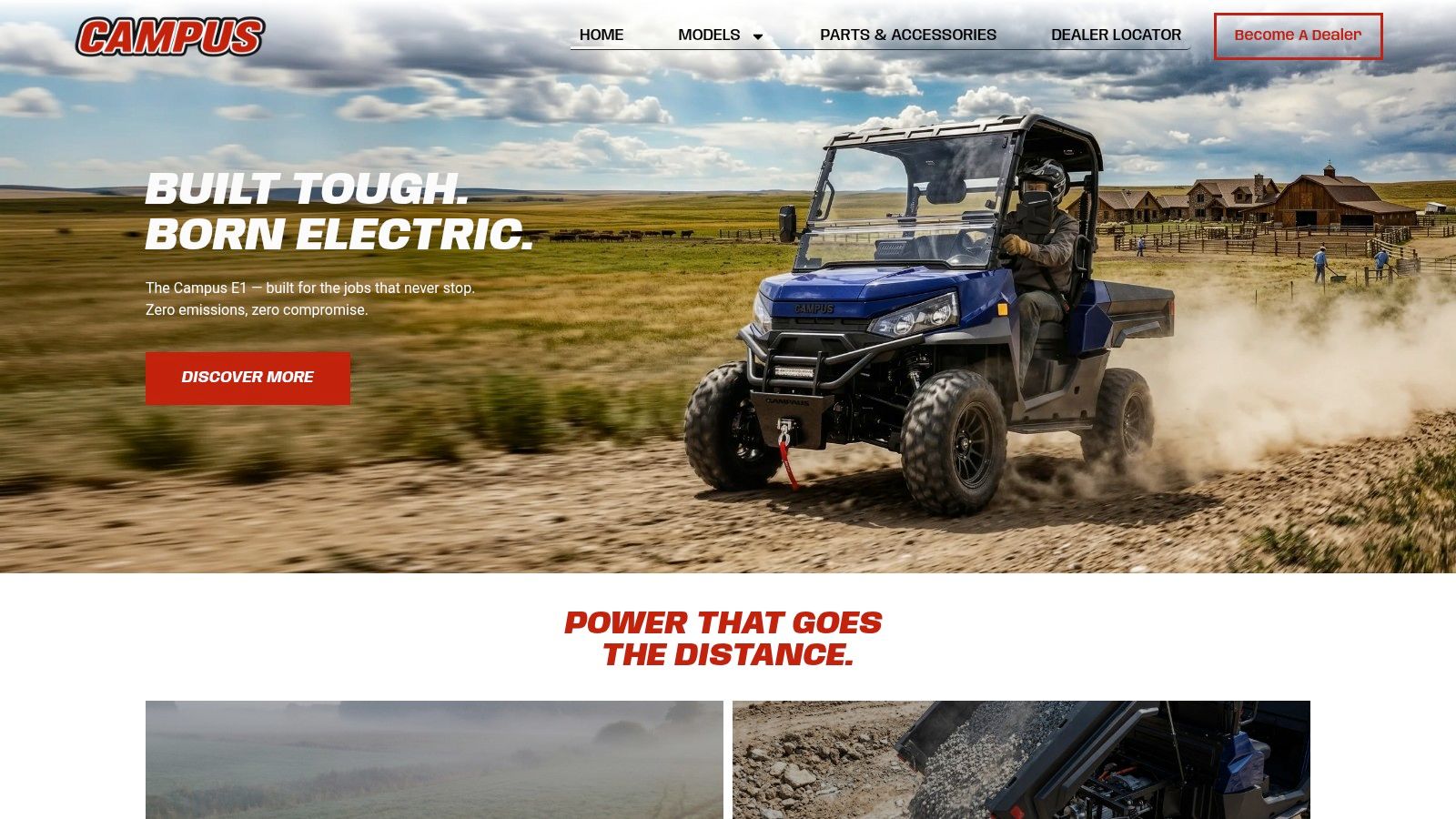
For many buyers, that second approach is the smarter one. A model like the Campus E1 fits that middle ground. It's relevant for people who want an electric side by side ATV for property maintenance, light trail use, hunting access, or utility chores, but don't want a premium-priced halo machine designed to make headlines.
That kind of balanced machine usually makes the most sense when your priorities look like this:
- Reliable daily use: The vehicle needs to start, move, haul, and repeat.
- Practical charging: It lives where power is available.
- Utility-first driving: You care more about usable torque and low noise than bragging rights.
- Value discipline: You want the benefits of electric without paying for capabilities you won't use.
That's the right lens for 2026 shopping. Not “What's the flashiest electric UTV?” but “What machine fits my land, my routine, and my charging reality?”
Frequently Asked Questions About Electric Side by Sides
Do electric side-by-sides lose range in rough conditions
Yes. Terrain, payload, hills, and driving speed all affect practical range. That's why headline numbers can feel optimistic once you add cargo, elevation, and repeated off-road use. Buyers should plan around their real route, not the best-case marketing scenario.
Can you charge one in the field
Sometimes, yes, but it depends on the machine, the available power source, and how much time you can afford to wait. Field charging is usually less about “Can I connect power?” and more about “Will I recover enough charge fast enough to keep working?” For many owners, field charging is a backup strategy, not the main plan.
Is an electric UTV good for hunting
It can be. Quiet travel and smooth low-speed control are real benefits. The catch is distance. If your hunting routine is predictable and charging is easy back at camp or home, electric can fit well. If you disappear deep into remote country for long periods, gas keeps life simpler.
What about cold and hot weather
Extreme temperatures can affect how a battery performs and how much usable range you feel during the day. The smart approach is to leave a bigger buffer in tough weather and avoid planning your ride around the absolute edge of the battery.
Does an electric UTV still need maintenance
Absolutely. It just needs a different kind of maintenance. You'll spend less time on engine-related service and more time paying attention to tires, brakes, suspension, charging equipment, and general vehicle condition.
Who should skip an electric side by side ATV for now
If you regularly run long distances far from power, need quick turnaround with no charging downtime, or don't have a dependable place to plug in, electric may feel like a compromise. For riders with shorter, repeatable routes and home-base charging, it can feel like a very natural upgrade.
If you're shopping for an electric utility vehicle and want a clearer look at practical electric UTV options, Campus EV is a useful place to start. Their focus on electric powersports and utility-focused side-by-sides makes it easier to compare what fits farm work, property maintenance, trail access, and everyday off-road use.