
Side by side prices in the current U.S. market range from about $1,599 on the low used end to roughly $80,000 on the high end, with used averages near $18,132 and new averages near $21,875 to $22,399. The sticker price isn't the number you should plan around, because freight, setup, taxes, insurance, financing, and maintenance can change the buying decision quickly.
You may be comparing a new work machine against a used rig with unknown hours, pricing several vehicles for a farm or warehouse fleet, or trying to decide whether a recreational model justifies its premium. In each case, the useful question isn't, “What does this UTV cost?” It's, “What will this machine cost for every useful hour it works?”
That distinction separates a good buy from an expensive mistake. A low-priced side-by-side can need immediate tires, belts, batteries, or certification work. A more expensive unit may hold value better, reduce downtime, and arrive ready for the job. The right answer depends on class, condition, duty cycle, and the cost of keeping the machine productive.
Table of Contents
- What Side by Side Prices Actually Look Like Right Now
- What Drives Side by Side Prices Up or Down
- New vs Used Side by Side Prices and What Each Really Costs
- Electric vs Gas Side by Side Prices Over Time
- How Trim and Features Move Side by Side Prices
- Financing and Total Cost of Ownership Beyond Sticker Price
- Matching Side by Side Prices to Your Real Use Case
- A Smart Buyer's Side by Side Price Playbook
What Side by Side Prices Actually Look Like Right Now
The current U.S. market has no single normal side-by-side price. Used listings run from about $1,599 to roughly $80,000, while the average used listing sits near $18,132. Across the broader listing pool, the average is around $21,875 to $22,121, and new listings average about $22,399, with new examples ranging from approximately $4,499 to $62,923, according to current U.S. UTV listing data.
That spread isn't caused by seating capacity alone. A compact utility machine, a crew-cab workhorse, and a high-performance sport model serve different buyers, use different hardware, and depreciate differently.
| Market Segment | Typical Price Range | Typical Buyer |
|---|---|---|
| Low-end used and compact machines | About $1,599 to $10,000 | Occasional property owner or budget buyer |
| Entry-level utility | About $6,000 to $10,000 | Light farm work, hunting access, basic hauling |
| Mid-range utility and sport-utility | About $10,000 to $27,000 | Farmers, ranchers, property managers, serious recreation |
| Performance and premium recreation | About $15,000 to above $40,000 | Sport riders and buyers seeking high output |
| High-end used or new specialty machines | Up to roughly $80,000 and beyond in premium listings | Commercial fleets, premium recreation, specialized work |
Industry pricing guides place entry-level utility machines around $6,000 to $10,000, mid-range utility and sport models around $10,000 to $15,000, and performance machines around $15,000 to $30,000 or more. Capable mainstream side-by-sides often sit around $18,000 to $27,000, while flagship performance models can exceed $40,000.
Start with the all-in number
Before comparing trims, write down the out-the-door price. Include freight, setup, documentation, taxes, registration, insurance, accessories, and any required charging or fuel equipment. Dealers may advertise a base figure that doesn't reflect the amount you must finance or pay.
Use three questions to frame the purchase:
- Value hunting: Is a lower-priced new work UTV smarter than a more expensive used machine with better equipment?
- Fleet operation: Will the vehicle remain productive through repeated farm, warehouse, or grounds cycles?
- Weekend recreation: Does a sport upgrade deliver useful performance, or only a faster way to spend more?
The buyer who answers those questions before visiting a dealer usually makes a better decision than the buyer who starts with monthly payment.
What Drives Side by Side Prices Up or Down
Side by side prices follow the machine's job more than its badge. A utility vehicle built for hauling and towing usually follows a different value curve from a sport machine built around suspension travel and engine output.
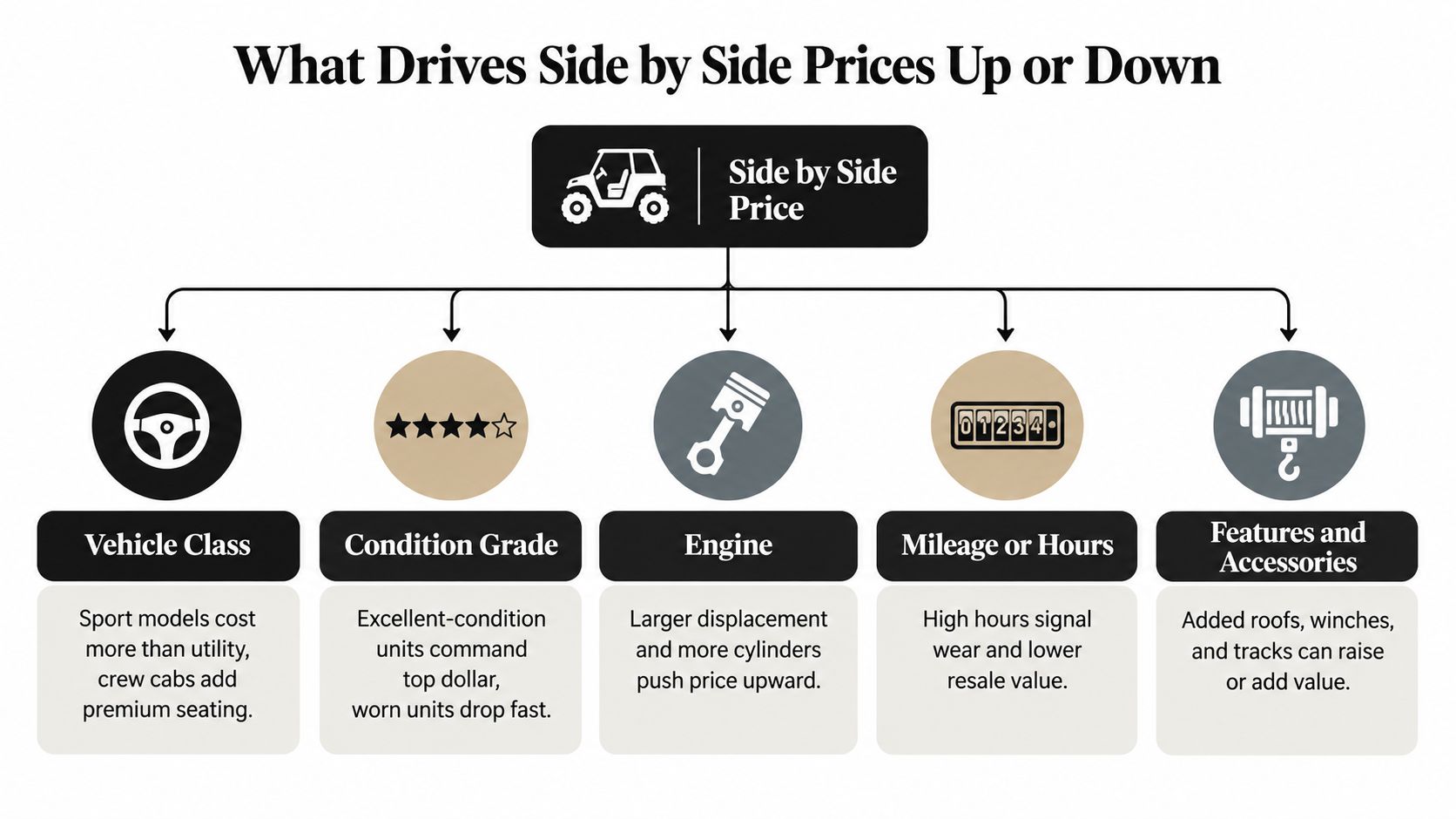
Five levers control the number
Vehicle class comes first. Entry-level utility machines commonly sit around $6,000 to $10,000, mid-range utility and sport-utility machines around $10,000 to $15,000, and performance or recreational models above $15,000, with premium examples exceeding $30,000, as outlined in UTV segment pricing guidance.
Engine size and layout also move the price. A small single-cylinder utility machine costs less to build and usually carries simpler equipment. Larger displacement engines, multiple cylinders, stronger cooling systems, and upgraded drivetrains push a vehicle into a higher price tier.
Condition and service history matter more than a polished listing. Worn tires, bent suspension parts, neglected fluids, cracked plastics, and a missing maintenance record can erase the apparent savings on a used machine. Rental-fleet vehicles may show careful maintenance, but hard use can still accelerate wear.
Hours matter more than miles. UTVs crawl, idle, haul, and work off-road, so the hour meter often tells more than the odometer. A machine with more hours can be the safer purchase if the owner documented service and used it gently. A lower-hour vehicle that spent its life jumping, towing beyond capacity, or running in dust may need more work.
Accessories can add value or just add cost. A winch, roof, windshield, plow, doors, tracks, upgraded suspension, and cargo equipment can make a work vehicle ready immediately. They don't automatically return their full purchase price at resale.
Practical rule: Price the machine as it sits, then price the work required to make it dependable. The second number is part of the purchase.
New vs Used Side by Side Prices and What Each Really Costs
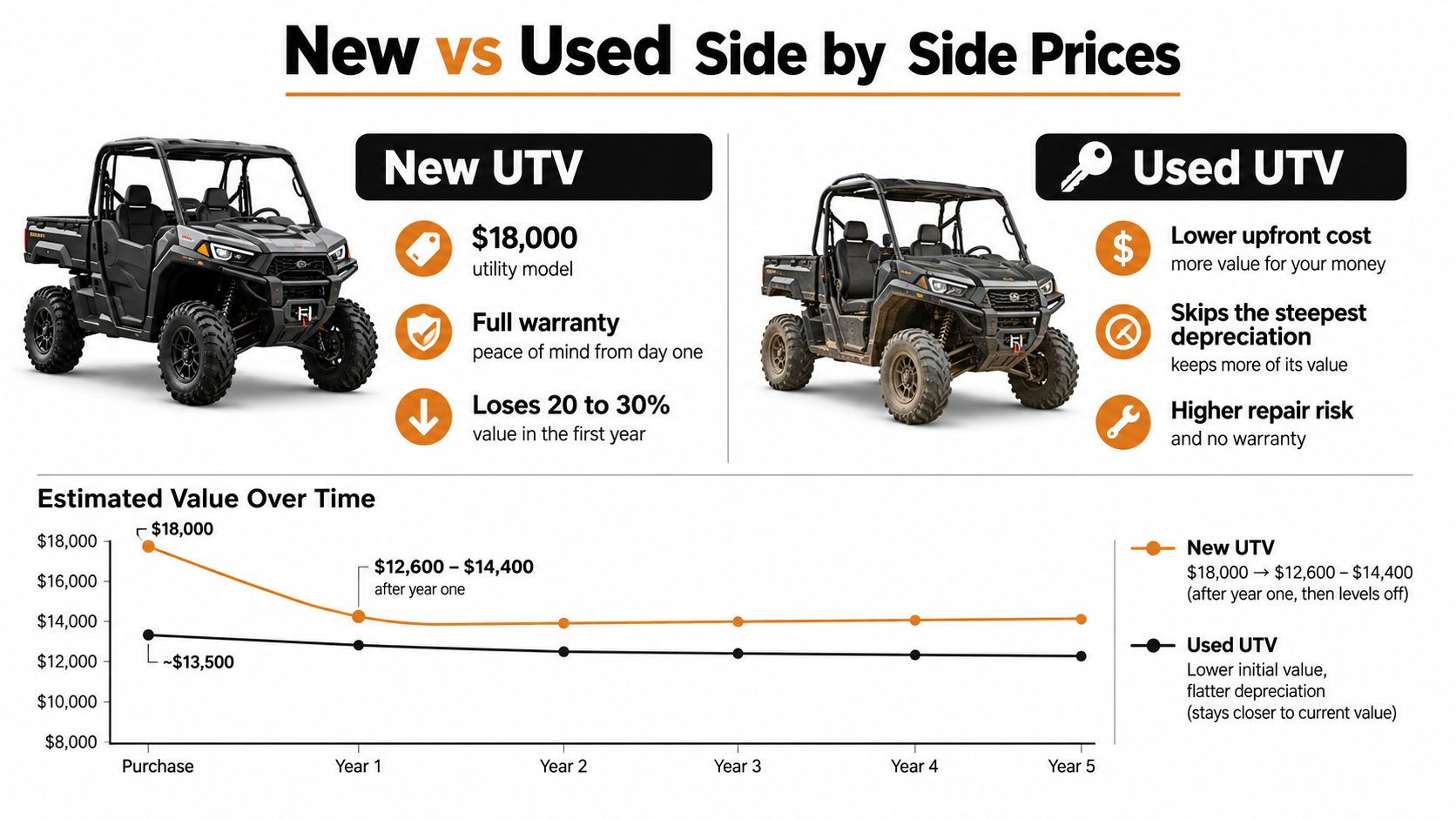
New and used side by side prices should be compared by risk, not just by the number on the windshield. A new machine gives you known hours, current components, and factory warranty coverage. A used machine may avoid the steepest early depreciation, but its first repair can consume the apparent discount.
Independent resale data indicates that a two- to three-year-old UTV with 200 to 500 hours commonly retains about 60% to 75% of original MSRP. That makes lightly used equipment worth serious attention, especially when the seller can provide service records and the machine's condition matches its hours. The new versus used UTV ownership comparison also emphasizes that taxes, dealer fees, insurance, and maintenance can change the net cost substantially.
The inspection decides whether used is cheap
A used buyer should inspect:
- Hour-meter consistency: Compare hours with tire wear, seat condition, pedal wear, and service records.
- Drivetrain behavior: Test engagement, shifting, four-wheel drive, differential lock, and braking under load.
- Chassis condition: Look underneath for bent control arms, damaged skid plates, leaking shocks, and frame repairs.
- Consumables: Tires, battery, belts, fluids, and brakes can turn a bargain into a project.
- Ownership history: Ask whether the vehicle worked on a farm, carried passengers recreationally, or came from a rental fleet.
A new buyer should ask for the complete out-the-door worksheet rather than accepting a base MSRP. Freight, setup, documentation, taxes, insurance, and accessories can materially raise the financed balance.
The right comparison is cost per productive hour. Divide the purchase and ownership costs by the hours you expect the vehicle to work, then account for downtime. A cheaper vehicle that spends weeks waiting for parts can cost more than a higher-priced machine that completes the job every time.
Electric vs Gas Side by Side Prices Over Time
Electric and gas UTVs don't compete on the same cost line. Gas machines require fuel, engine oil, filters, belts, and combustion-related service. Electric machines shift more of the ownership question toward charging access, battery capacity, duty cycle, and eventual battery replacement.
That makes electric especially interesting for short, repetitive routes. A hunter moving quietly between a trailhead and a blind, a warehouse operator running predictable loops, or a grounds crew making frequent stops may use a machine differently from a rancher towing heavy loads throughout a long workday.
Match powertrain to operating pattern
Gas remains the straightforward choice when refueling speed, long-distance range, heavy towing, or remote operation dominates the job. A gas drivetrain also gives buyers a broad used market and familiar service procedures.
Electric deserves a closer look when the vehicle returns to a known charging point and works in short cycles. Energy use is easier to control when routes are predictable, and the drivetrain has fewer routine service systems than a gas engine. That doesn't make battery wear irrelevant. The buyer must ask about charging requirements, warranty coverage, replacement availability, and how much reserve remains after a full work cycle.
The Campus E1 electric side-by-side ATV fits this value discussion as a work-oriented electric option for buyers who can charge between operating cycles. The purchase makes more sense when quiet operation, simple daily routing, and lower routine service complexity matter more than maximum range or high-load towing.
| Cost Category | Electric UTV, such as Campus E1 | Gas UTV, mid-range |
|---|---|---|
| Energy | Electricity cost depends on battery size, local rates, and charging routine | Fuel cost depends on engine load, route length, and fuel prices |
| Routine service | Fewer engine-related service items | Engine fluids, filters, belts, and combustion-system service |
| Downtime risk | Depends heavily on charging access and battery support | Refueling is familiar, with broad mechanical service availability |
| Heavy-duty use | Best evaluated against payload, slope, and duty cycle | Often better suited to sustained heavy loads and remote work |
| Long-term value | Battery condition and replacement support are central | Engine, clutch, belt, and drivetrain condition drive resale |
Don't compare electric and gas using sticker price alone. Record annual hours, average route length, payload, charging access, and downtime cost. Then ask which powertrain can complete the work without forcing the buyer to pay for capability that rarely gets used.
How Trim and Features Move Side by Side Prices
Trim levels are where buyers often pay for capability they won't use. A base utility model can be the right tool for hauling feed, checking fences, moving supplies, or crossing a warehouse yard. A premium trim makes sense only when its added suspension, protection, comfort, or drivetrain capacity directly supports the job.
| Trim Tier | Price Range | Best For | Payback Features |
|---|---|---|---|
| Base utility | About $6,000 to $10,000 | Light hauling and property work | Cargo bed, basic protection, practical tires |
| Mid-range utility or sport-utility | About $10,000 to $27,000 | Regular farm work, hunting, mixed use | Winch, roof, windshield, stronger drivetrain, useful towing equipment |
| Premium recreation or heavy-duty configuration | Above $15,000, with premium machines above $30,000 | Aggressive recreation or demanding commercial work | Advanced suspension, high-output engine, cab protection, specialized accessories |
These ranges reflect broad market tiers, not a promise that every model follows the same ladder. Current UTV pricing bands show why buyers should compare function within a class instead of comparing an entry utility model with a flagship sport machine.
Pay for work, not showroom appeal
A winch earns its keep when the vehicle regularly faces mud, slopes, snow, or fallen timber. A roof and windshield matter for weather exposure and long workdays. A cab system can justify its cost for cold-weather operations, but it may reduce maneuverability in tight warehouse aisles.
Tire choice is another quiet price driver. Aggressive tires improve traction but can increase noise, wear, and steering effort on hard surfaces. A smooth warehouse floor usually rewards a different setup from a rocky hunting trail.
Suspension upgrades deserve scrutiny. They help when terrain speed, ride control, and wheel travel affect productivity. They don't add much value to a vehicle that spends its life on packed farm lanes.
Spend on the feature that prevents a real cost. A winch that prevents recovery downtime has a clearer business case than decorative trim that never changes the work.
Financing and Total Cost of Ownership Beyond Sticker Price
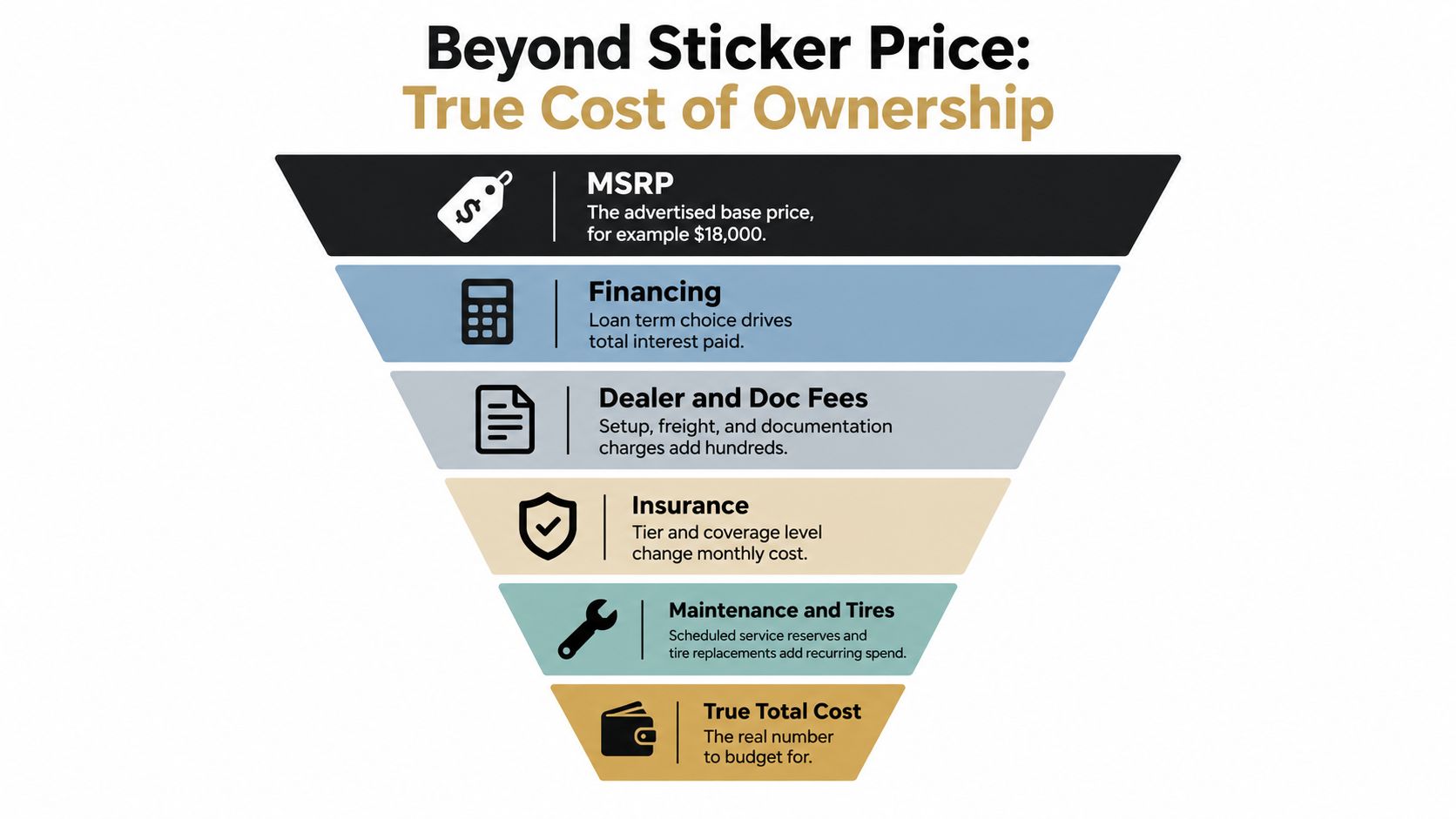
A monthly payment can hide an expensive machine. The useful worksheet starts with the cash price, then adds every cost required to own and operate the UTV.
List these items before signing:
- Purchase amount: Include the actual trim, installed accessories, and required equipment.
- Dealer charges: Ask for freight, setup, documentation, preparation, and registration as separate lines.
- Financing: Compare total repayment, not just the monthly figure. A longer term can lower the payment while increasing total interest.
- Insurance: Coverage, use classification, location, and vehicle value can change the premium.
- Maintenance reserve: Budget for fluids, filters, belts, brakes, tires, and inspection work.
- Energy: Estimate fuel or electricity from your actual route and annual operating hours.
- Residual value: Estimate what the machine may be worth when you plan to sell, based on class, condition, and service history.
Build a simple ownership model
Use this formula:
Three-year ownership cost = purchase and financing costs + fees + insurance + energy + maintenance and repairs minus expected resale value.
Then divide that result by expected productive hours. If you expect limited use, a lower-maintenance electric vehicle may deserve consideration even if its initial price isn't the lowest. If you expect long, heavy cycles, a gas model may justify its fuel and service burden through range and load capability.
Don't ignore the structure of the transaction. Buyers comparing a purchase with other acquisition methods can review a practical guide to deciding between leasing and buying, then apply the same total-cost logic to a UTV rather than focusing on payment alone.
For maintenance planning, use a written schedule and reserve cash before the first breakdown. The UTV maintenance cost guide can help buyers identify the service categories they should include in their worksheet.
Matching Side by Side Prices to Your Real Use Case
The right side by side price depends on what the vehicle does between sunrise and shutdown. A hunter, rancher, construction supervisor, and warehouse manager may all need a cargo bed, but they don't need the same range, tires, suspension, or weather protection.
| Use Case | Recommended Class | New Price Range | Used Price Range | Best Value Pick |
|---|---|---|---|---|
| Hunting and property access | Quiet utility or sport-utility | About $14,000 to $22,000 | Mid-tier used market | Prioritize low noise, cargo space, winch, and condition |
| Farming and ranching | Utility workhorse | Around $18,000 and up | Around $13,000 and up | Choose dependable torque, bed capacity, and service support |
| Construction and grounds work | Heavy-duty utility | About $20,000 to $35,000 | Price according to condition and equipment | Size for payload and gross vehicle weight first |
| Warehouse and campus routes | Compact electric utility | Varies by configuration | Varies by battery condition | Choose electric when routes are short and charging is available |
Hunters should buy access, not horsepower
For hunting property, quiet operation, reliable low-speed control, and a usable cargo bed usually matter more than top speed. A winch and protective equipment can prevent a recovery problem from ruining a trip. Buy a mid-tier utility machine with a documented history rather than a high-output sport model whose capabilities won't improve access.
Farms and ranches need uptime
Daily chores punish weak payload systems, poor cooling, and neglected drivetrains. A used utility machine can work well when service records are complete and the inspection is thorough. An electric work UTV can fit a ranch or farm with predictable routes and convenient charging, but buyers must verify its load, slope, and operating-cycle suitability before choosing it.
Construction crews should begin with payload, towing, ground clearance, and protection. A powerful engine doesn't compensate for an undersized bed or a chassis that can't handle the tools and materials carried each day.
Warehouse buyers should focus on turning radius, braking, floor-friendly tires, charging access, and operator training. The side-by-side vehicle overview gives new buyers useful terminology for comparing utility layouts before they request quotes.
A Smart Buyer's Side by Side Price Playbook
A disciplined buyer needs three numbers before entering a dealership. The first is the realistic out-the-door total, including the vehicle, selected equipment, freight, setup, documentation, taxes, registration, and any required insurance.
The second is the three-year ownership estimate. Add financing, energy, insurance, maintenance, likely repairs, and depreciation. Subtract the expected resale value. Don't make the estimate optimistic. Use the condition and resale behavior of the specific class you're considering.
The third is the target resale value. This number tests whether the trim, powertrain, hours, and accessories are likely to remain attractive to the next buyer.
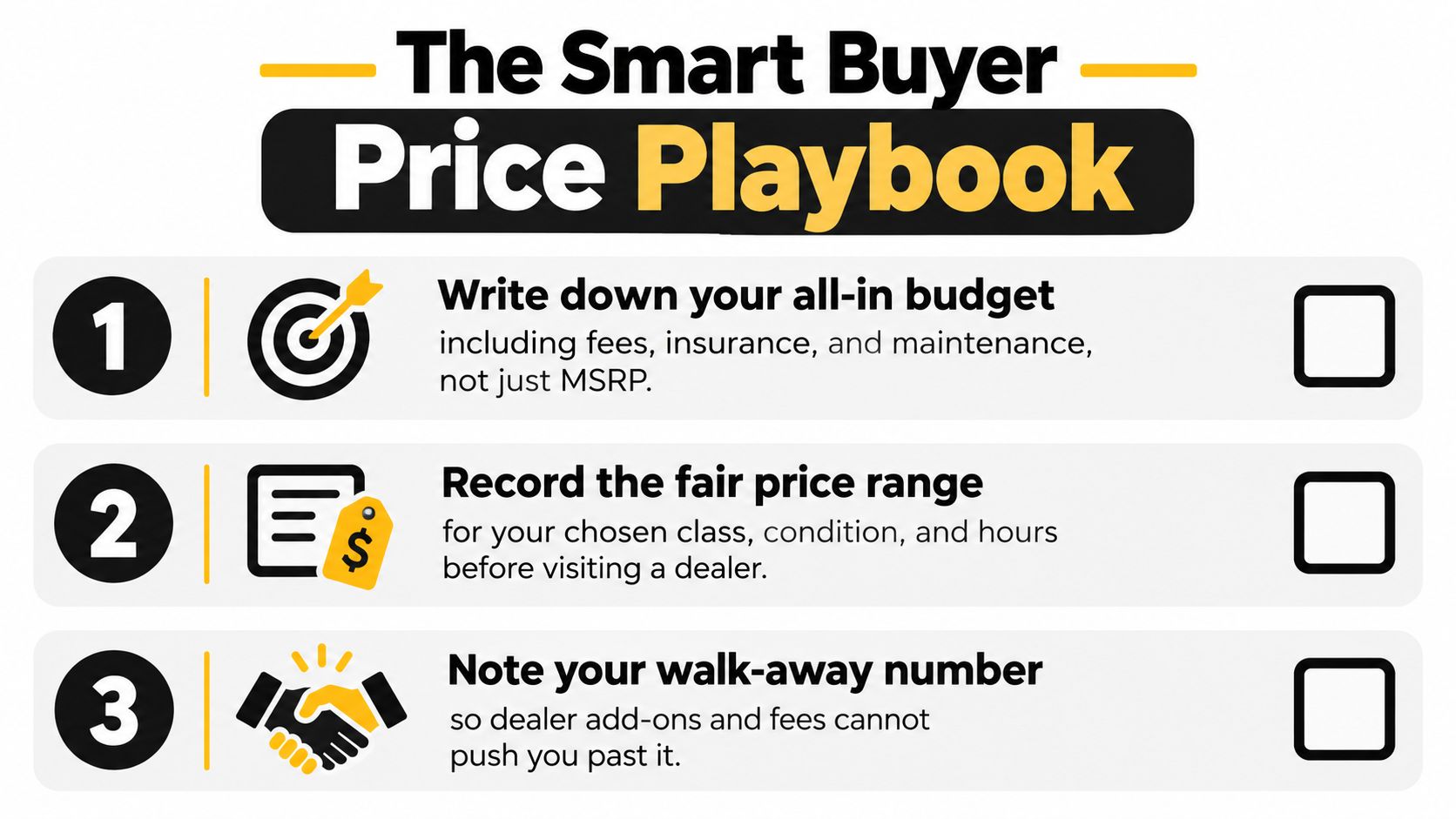
Use the worksheet before the test drive
Write down:
- All-in purchase limit: The maximum amount you can pay without sacrificing the operating reserve.
- Expected productive hours: A realistic estimate based on your farm, hunting, warehouse, or construction schedule.
- Walk-away price: The number that includes every fee and accessory you actually want.
Two red flags deserve an immediate pause. First, avoid a used unit with unknown service history unless the price leaves room for a professional inspection and repairs. Second, question a new model priced far below comparable machines. The difference may reflect missing certification, a limited warranty, incomplete equipment, or support costs that appear later.
Ask the dealer one direct question:
“What is the complete out-the-door price, including every fee, installed accessory, tax, warranty charge, and required setup item?”
If the answer changes after you ask for the worksheet, you haven't found the side by side price yet.
Campus EV offers electric UTV products centered on practical work and short-cycle operation, including the Campus E1. Visit Campus EV to compare its electric approach with the total ownership requirements of the gas and used machines on your shortlist.